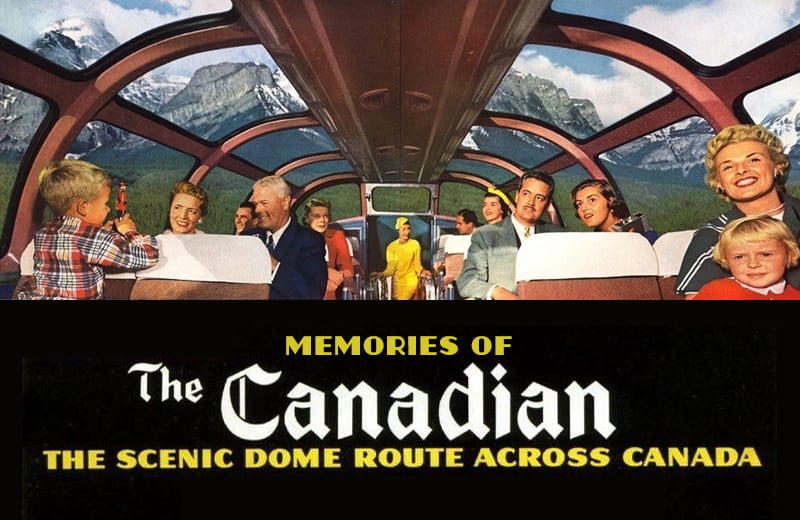
Memories of The Canadian The Scenic Dome Route Across Canada
I got to reminiscing the other day about The Canadian, once the CPR’s crack passenger train, introduced in April 1955. It wasn’t until 1965 that I first rode it as a boy, but my recollections of a trip from Revelstoke to Toronto are still strong. My memories were twigged when noticing that Kellogg’s still puts cereal in boxes that can be used as bowls. Why do kids like this? I don’t know—why do cats like paper bags? I don’t have all the answers here!
I first ate corn flakes from a miniature box aboard a Skyline dome car on The Canadian, and was thoroughly tickled by the novelty of it. I guess that’s why Kellogg’s maintains the package design today.
Maybe you recall some of the conventions of having your own breakfast with the CPR? Did you fill out your own menu request using a four-inch pencil, which was then handed back to the waiter? It made this boy feel very grown-up to have such control.
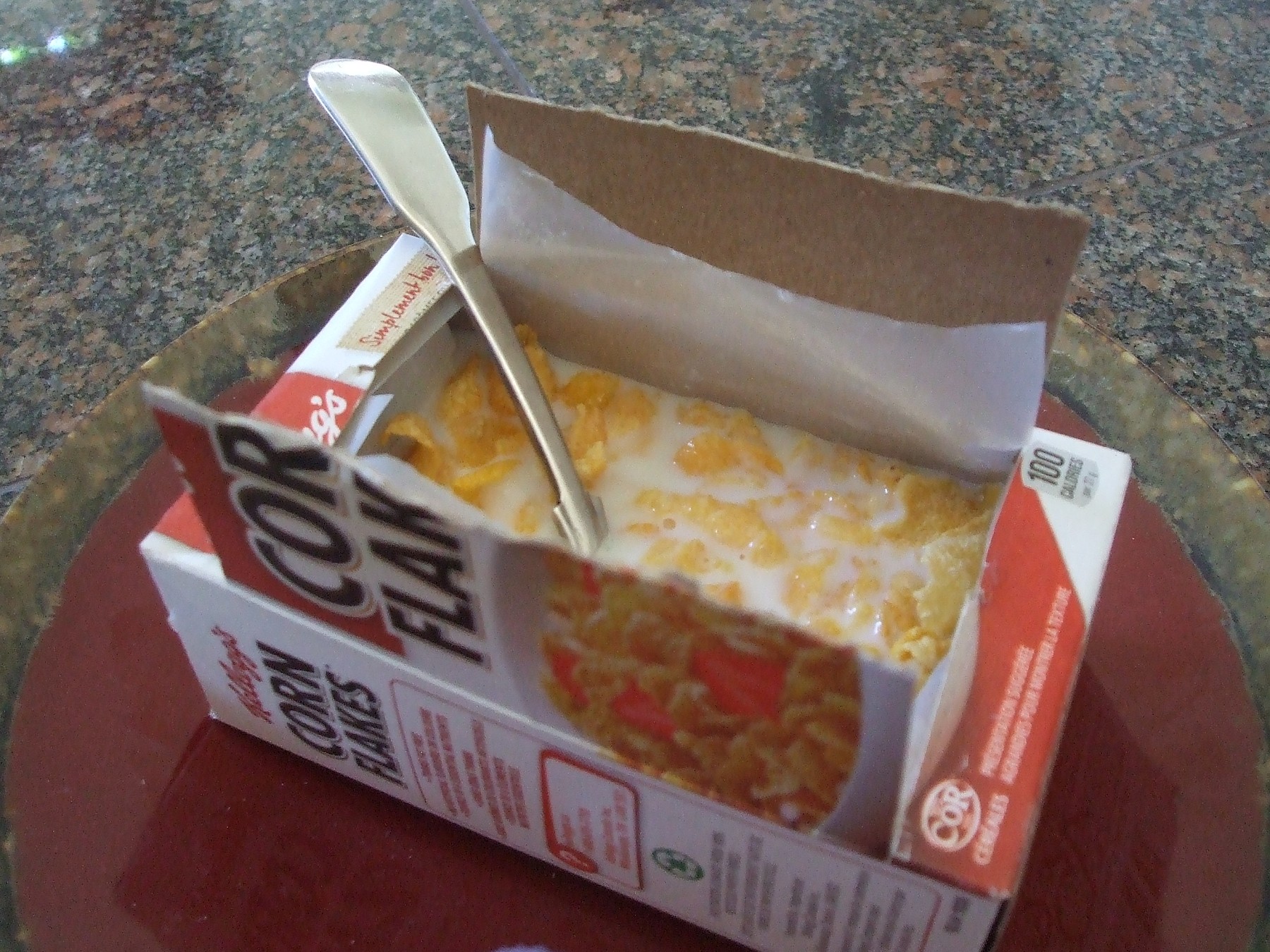
Photo © TW Parkin.
The Rhythm of the Rails
The luxury of moving while sitting is also fixed in my mind. The rhythmic tick-tick of segmented track was a constant reminder of our progress across the vastness of Canada. Once on the prairies, our speed increased.
The rhythmic tick-tick of segmented track was a constant reminder of our progress...
Dad was a locomotive engineer, and estimated we were going 80 mph because 47 poles flew by per minute, according to his pocket watch[1]. Then we hit a section of rough track. There was a crash in the galley, immediately followed by some words I didn’t understand.
My parents pretended they didn’t know, either.
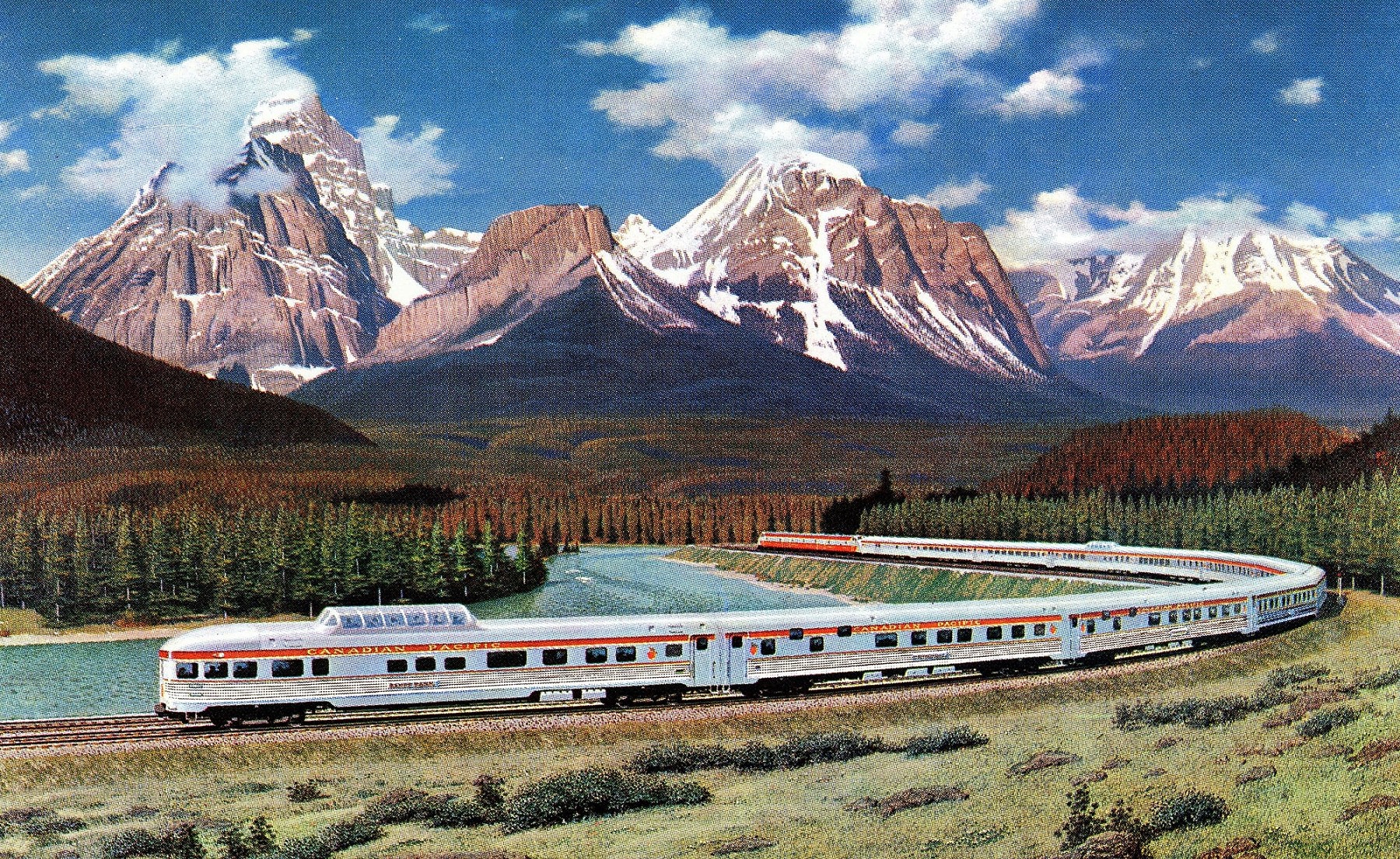
Banff Park observation coach brings up the tail end in this artist’s conception of the Rockies and Bow River, Banff National Park, AB. The vista had already been made famous by CP photographer Nick Morant, beginning in 1947. Before delivery of the stainless steel cars on-site photos were not possible, so advertising utilized this creative scene. From the collection of BG Williamson.
Table Manners
Friend Bruce Williamson tells a dining car story from when he too was a boy aboard The Canadian. He was minding his mealtime manners as polite boys do, when their locomotives ran into a snow slide across the tracks. The whole train stopped abruptly. A large lady sitting at a table across the aisle was thrown forward by momentum, leaning precipitously over her breakfast before flopping back into her seat. On return, her ample bosom snagged some tableware which returned with her in a spill and clatter.
No one was hurt, but boys find such scenarios vastly amusing. It must have seemed like some Saturday morning cartoon on TV. Mothers are less easily amused however, so my friend suffered corrections to his etiquette on that occasion, but that scenario too, remains imprinted in his memory.
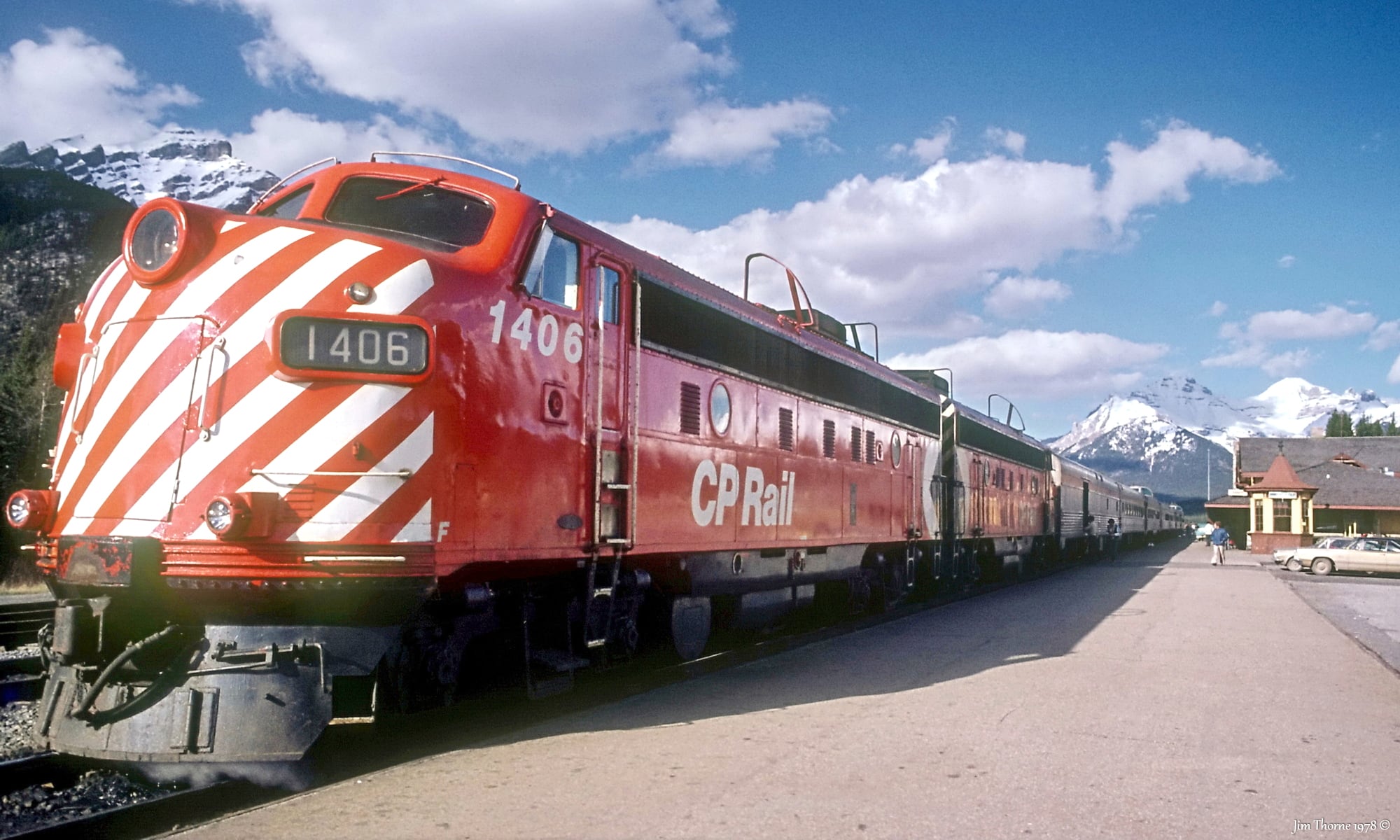
CP 1406 westbound with The Canadian at Banff station, AB, 12 May 1978. Some CP locos were fitted with ditch lights as early as 1976. They were added in response to safety needs on high-profile passenger routes where visibility was a high priority. Photo © JS Thorne.
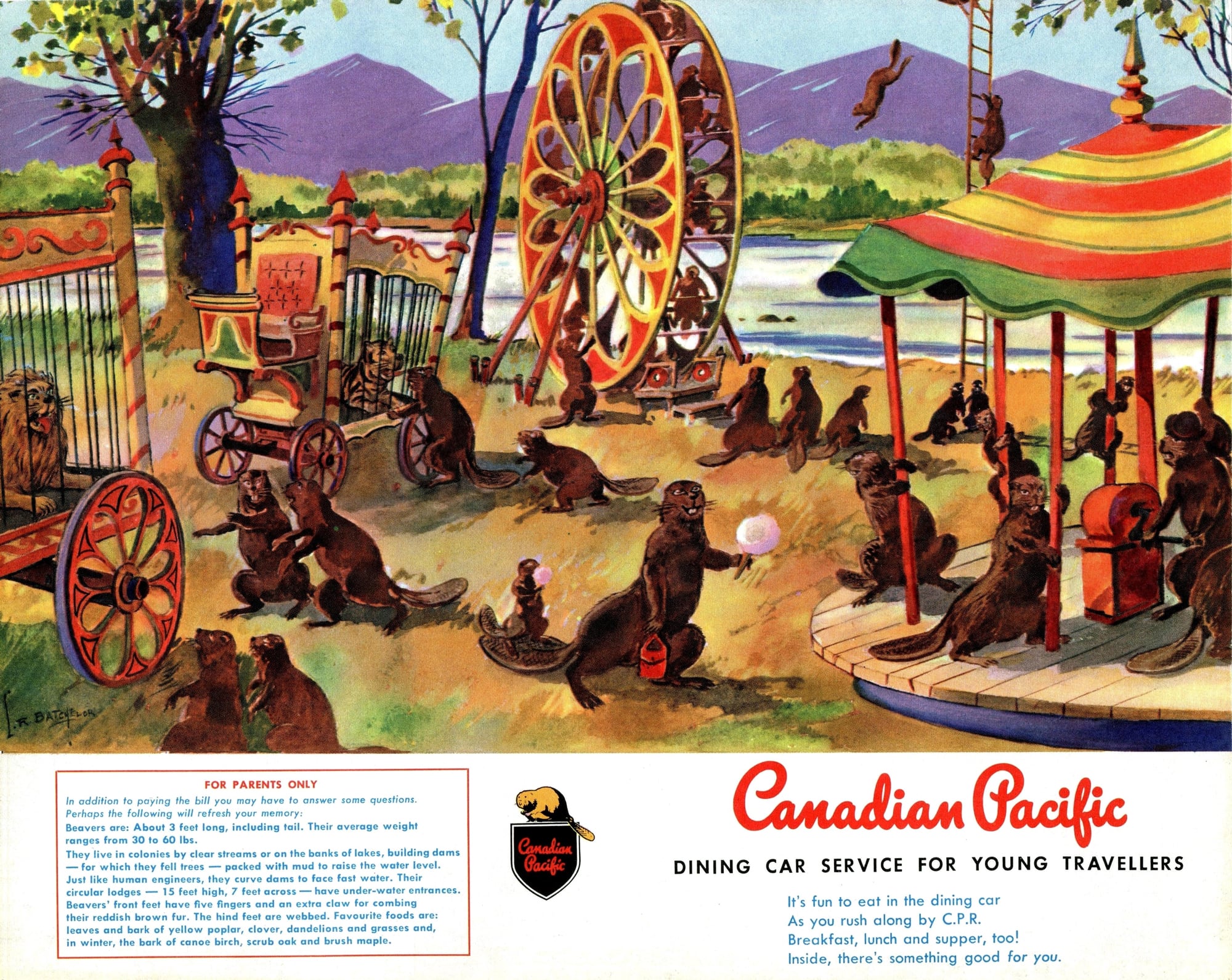
A veritable carnival of beavers (a symbol of CPR heritage and industriousness) having human fun encourages kids to keep track of their menu order while en route. The picture is signed L.R. Batchelor. He was a freelance Canadian painter and illustrator of numerous books. From the collection of BG Williamson.
Reviving Passenger Rail
The Canadian was CP President “Buck” Crump’s (a former Revelstoke boy) project. It was his idea to bring passengers back to the railway. Between 1945 and 1952, CPR’s passengers carried total declined from 50.6 million to 29.9 million, largely due to faster highways and airline service. Passenger trains represented a bygone era and were slow. Once dieselisation was well in hand on his road, Crump turned his attention to his railway’s declining passenger business[2]. The Canadian was his vision to achieve this. It even came with its own light show.
Passenger trains represented a bygone era and were slow.
I recall standing on Revelstoke’s station platform at night with westbound #1 approaching. As it came around the bend from the Illecillewaet valley into the Columbia valley, the lead engine’s roof lights showed before its engines could be heard. Two high intensity lights, pointing obliquely into the sky, gyrated back and forth, drawing attention to their train’s approach. It was a safety mechanism, but also created an aura of wonder when reflecting off low clouds like some manmade aurora[3].

A representation of an early public time table heading.
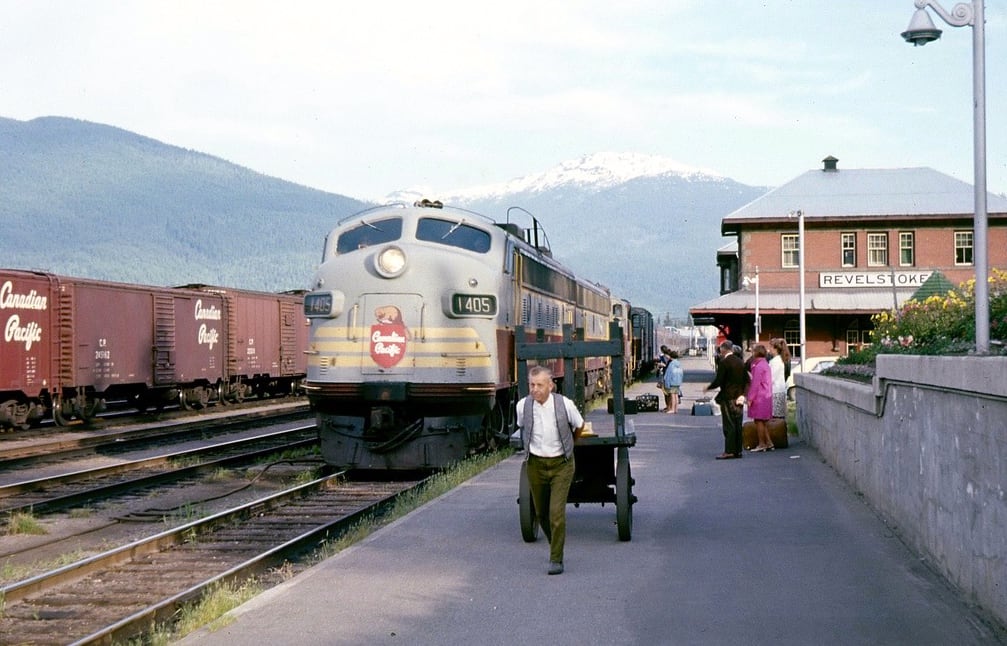
The Canadian #2 eastbound 3 July 1968 at Revelstoke, BC. The baggage handler positions his cart in anticipation of where the baggage car will stop. Lead CP 1405 is a General Motors FP7A with a B unit immediately behind. Each develop 1500 HP; the B unit generates steam for heating the train. Photo © R Rick Horne.
Summer Work at the Station
When fresh out of high school, I had a summer job fuelling and watering The Canadian’s A and B units at the station as the train came through. We had 20 minutes to top up three locomotives. It was a busy period, often in the dark, as the running crew changed and machinists checked the engines.
If you grew up in Revelstoke, or any other divisional point, it’s hard not to have trains return to mind.
Once I missed filling the tank of one of the B units which generated steam for heat and hot water in the passenger coaches. But it still provided power, so its alarm must have been turned off and the tank filled at the next divisional point. No one was ever certain who fouled up!
If you grew up in Revelstoke, or any other divisional point, it’s hard not to have trains return to mind. For me, they carry happy memories and have formed the foundation of many friendships over the decades. I expect to ride them for the rest of my years.
MENU ADDITION
A classic American delicacy is to be added to new CPR ‘Skyliner’ Coach cars. The ‘Skyliner’ Coaches will be the first of their kind in the world to add hot dogs to the menu. There was much public demand for these treats to be available on board the trains. The ‘Skyliner’ would also have reserved coach seats, a coffee shop and over-the-roof views.
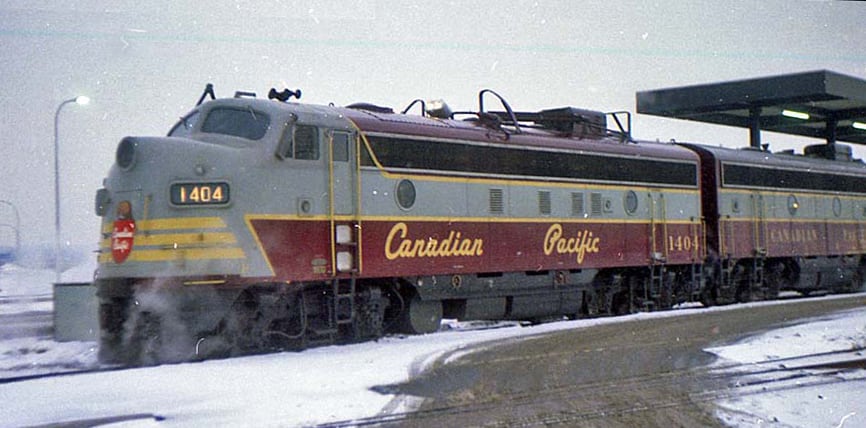
CP FP9A at Ottawa station, ON. The framework on the roof of 1404 breaks icicles hanging from tunnel roofs. Dome car glass following behind was thus protected. Between the lead pair of ‘breakers’ appear the twin Gyralites. Note the absence of ditch lights. Photo 21 Jan 1967 © Bruce Chapman.
A Lasting Place in Rail History
Although decades have brought changes to both the service and Canada’s passenger network, The Canadian still holds a distinctive place in Canada’s rail history. Its stainless-steel consist, dome-car views, and ambitious transcontinental schedule stood as a final, confident expression of Canadian Pacific’s passenger era.
The Canadian still holds a distinctive place in Canada’s rail history.
For many, it offered a last glimpse of classic streamliner travel, when railways still aimed to capture the public imagination with comfort and scenery. Those memories endure because the train became more than transport. It linked communities and shaped countless personal experiences. Whether recalled through the rhythm of jointed rail or a brief comedy at a station stop, The Canadian continues to tie individual recollections to a wider chapter of our national history.
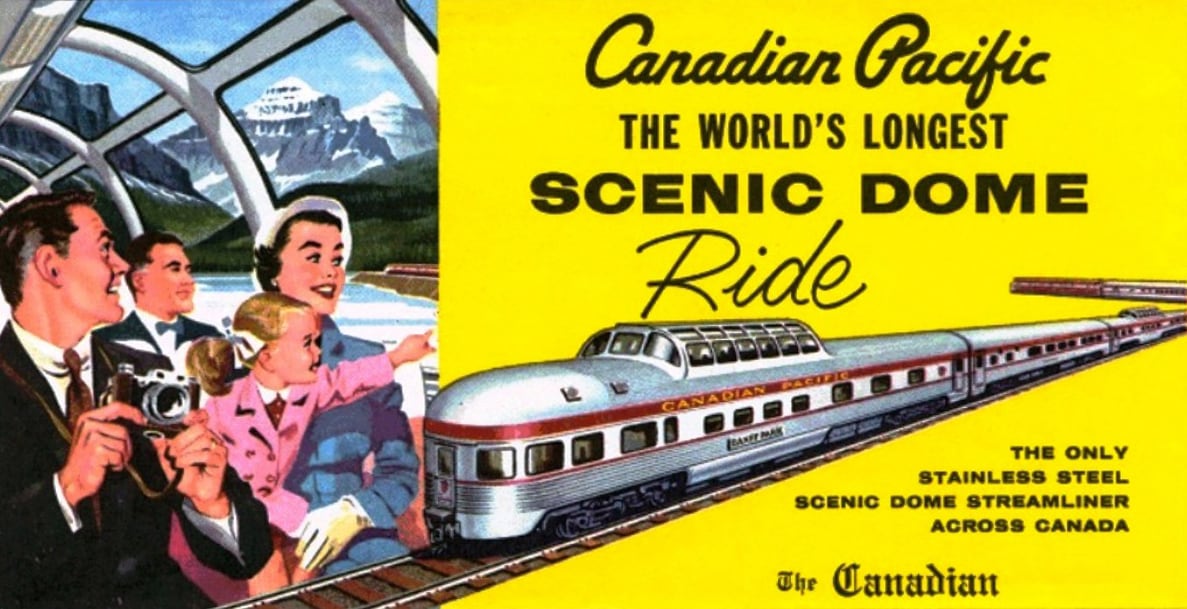
In a technique known as découpage, a corporate artist’s interpretation of a dome car’s interior is enhanced by a photo view of scenery near Lake Louise, AB. These mountains cannot actually be viewed at this angle from the train. From the collection of BG Williamson.
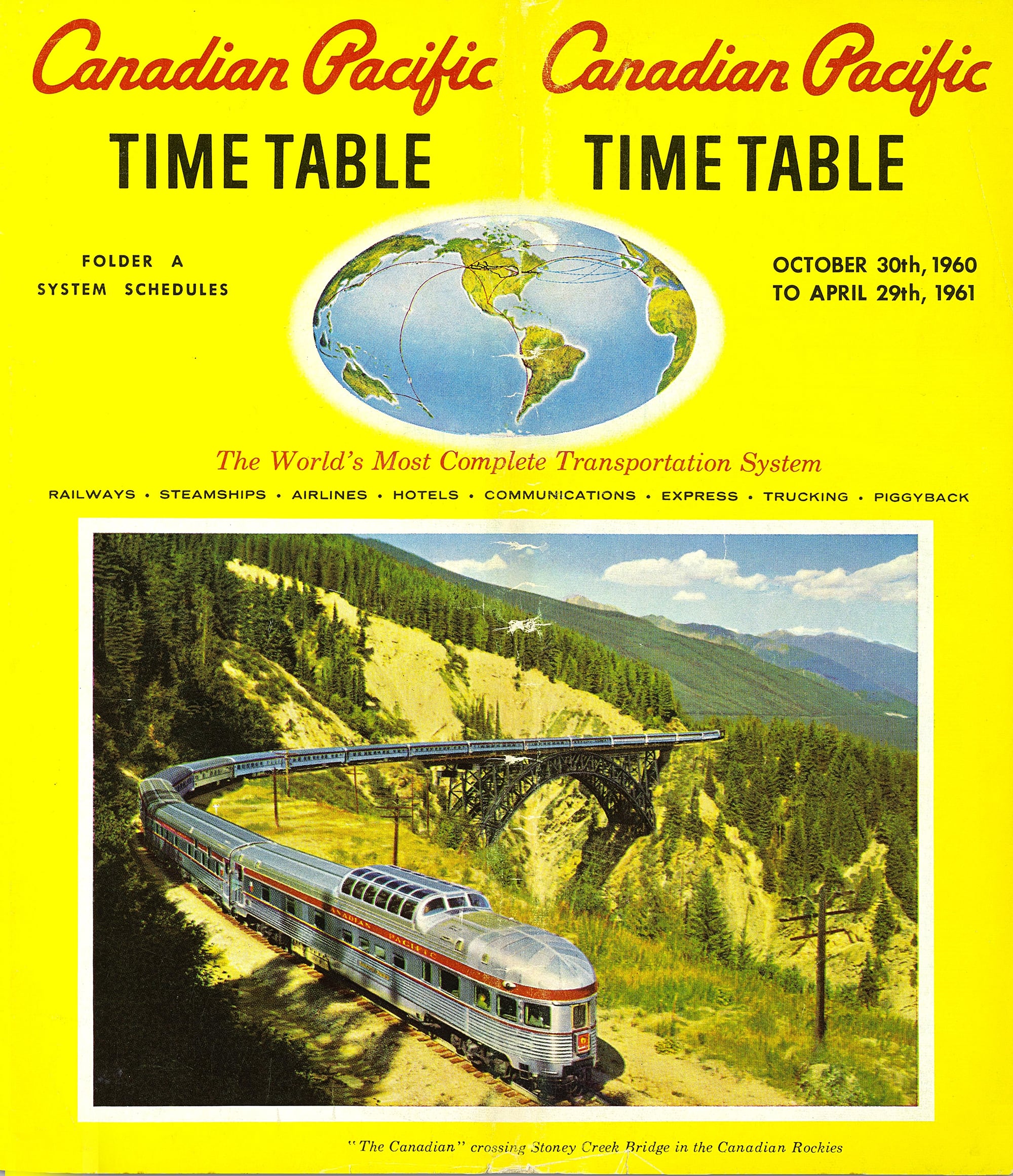
In this classic view of Stoney Creek bridge—situated in the Selkirk Mountains, within Glacier National Park—a CP photographer captured The Canadian heading east. During this era, dining-car staff routinely threw galley refuse out of a trapdoor into the void. From the collection of BG Williamson.
References
- Telegraph poles were spaced 150 feet apart. Engineers learned to estimate train speeds by pocket watch because steam locos did not have speedometers.
- Quoted from Nicholas Morant’s Canadian Pacific by J.F. Garden, 1993, page 395.
- These were Gyralites, but commonly mistaken as Mars lights, which was a competing company which also made locomotive safety lights. Only A units carried them.
Did You Enjoy This Article?
Sign Up for More!
“The Parkin Lot” is an email newsletter that I publish occasionally for like-minded readers, fellow photographers and writers, amateur historians, publishers, and railfans. If you enjoyed this article, you’ll enjoy The Parkin Lot.
I’d love to have you on board – click below to sign up!